
Online sportsbooks have been around for 20 years. There’s never been more sports, leagues, games and betting options available to everyone around the globe. Obviously, we’ve never had as many sportsbook operators as we do now, either.

Anyone interested in keeping their money safe should choose a sportsbook that’s reputable, accessible and has a proven track record.
You’re trusting these folks to hold your hard-earned cash and to pay your winnings – as much as we’d like to live in a perfect world, the vast majority of these sites are not worthy of your trust.
By only reviewing betting sites that accept live bets, though, we have an easier job. Not all sportsbooks accept in-play wagers since doing so requires lots of resources – therefore we primarily review the biggest in the world because the smaller ones lack ample resources.
| Book | Features | Website | Review | Bet now |
|---|---|---|---|---|
 |
|
MyBookie | Read Review | Bet now |
 |
|
Xbet | Read Review | Bet now |
 |
|
SportsBetting.ag | Read Review | Bet now |
 |
|
BetNow | Read Review | Bet now |
 |
|
BetOnline | Read Review | Bet now |
Almost every major online bookmaker offers live odds these days. Just like with regular odds, they differentiate from each other by offering different depth, focus and quality in their betting selection.
Additionally, they compete with each other by offering live streams of sporting events. It’s especially popular in the U.K. where you’ll see loads of ads during half-time, urging you to put your money on propositions such as ”does Wayne Rooney score during the second half?”
If such ads were allowed in the U.S., you’d undoubtedly see quite a few of them as well.
 U.S. sportsbooks offer live betting options as well, although the selection of sites offering it and the selection of sports, leagues and games offered are significantly smaller than in countries outside of the U.S.
There’s Bovada, BetOnline, Bookmaker, and 5Dimes. That’s about it.
Out of those four, 5Dimes and Bookmaker (especially 5Dimes) offer the best betting lines consistently. That’s not the only consideration, though, as it’s the quality of the overall service that matters, and that especially goes within the U.S. market which includes a high penetration of dishonest gambling sites.
Canadians have more options. Even the giant Bet365 accepts Canadian customers in addition legendary sites like Bodog, Sports Interaction and Pinnacle Sports. Compared to their U.S. counterparts, Canadian sports bettors have it good.
 There are also fewer markets and options in the U.S. than, say, at the biggest U.K. online bookies like Bet365, William Hill, Betway, Paddy Power, and Ladbrokes.
Some U.K. online bookmakers stream live events so you can watch the event at their site and bet at the same time. Bet365 streams more events than any other site (they claim to offer live streaming for 70,000 events).
You can watch and bet on domestic football matches, as well as Italian Serie A, UEFA Cup, La Liga, Portuguese Superliga, MLS and more.
They also offer live streaming video for cricket, tennis, rugby, NFL football, MLB baseball, NHL hockey, NCAA college football & basketball, golf, F1, volleyball, and a number of international basketball leagues. All games streamed on Bet365 Live are equipped with an in-play betting menu so you can instantly place your bets as you watch the events.
 Australia prohibited gambling on live events due to it being ”too addictive” relative to pre-match betting. Bookmakers were able to get around this restriction because telephone betting is allowed (William Hill was the first to do so), so you could place a bet online which automatically initiated a ”call” to the bookmaker to make the bet (also known as “click-to-call”).
The Australian government, however, wants to close the loophole.
Online sports bettors in general have a wide range of options in Australia, such as Bet365, William Hill, Sportsbet, and Pinnacle Sports.
In addition to accepting in-play bets, what does a good sports betting website offer its customers? What should you expect from some of the best gambling sites in the world?
Those are the most important requirements. There are various other features that a sportsbook may provide that can enhance your experience. Here are a few of them:
As you can see, running a high-quality betting operation is not all that easy. As bettors, we take a lot of stuff for granted so understandably many bookmakers fail to meet our standards.

When you place a sports bet with a sportsbook, you’re either going to be putting cash down on a point spread, moneyline, over/under or some form of exotic. Before a betting slip is ever posted, someone or many people have worked hard to create that slip.
Sportsbook post odds and lines that they believe will help spread the bets out between the two teams on the betting slip. Although the sportsbook can make cash on losing wagers, they really make their money consistently on the commission or “juice” that they charge each bettor on every wager that they make.
It’s important that they get action on both sides of the bet because that allows them to easily payoff bettors while collecting their commission.
Handicappers, who are also known as oddsmakers, are professionals who know a lot about sports betting and specific sports. Some sports handicappers specialize in the NFL, while others focus on college basketball and still others may devote their time to MLB or soccer.
These professionals develop the odds and lines for live betting websites. In order to do this accurately, they have to keep up to date on every aspect of the sport. One of the things you’ll notice about many oddsmakers is that they tend to be creatures of habit and often they are slow to change their minds about a team.
In other words, handicappers are often slow to acknowledge that a team that has performed poorly for years has made a major break through or to downgrade a club that is in decline. This is important for every sports bettor to remember when checking out lines and odds. You may be ahead of the curve on some developments and some oddsmakers may be behind you.
The fact is that stability in terms of odds and predictability when it comes to any team’s performance is what allows handicappers and sportsbooks to make cash. For this reason, handicappers are reluctant to acknowledge changing tides when it comes to a team or a sport because it may simply be a blip on the radar screen and not a lasting change.
Odds are as accurate as they can be. The fact is that every day in Major League Baseball, every week in the National Football League and every time a sport is played anywhere an upset can happen. If you follow the NFL, you know that often within one week 60% or more of the favored teams don’t beat the spread and 40% or more may lose outright.
The accuracy of odds is determined by numerous factors, including:
The other thing to remember about betting lines is they are not true odds in terms of who may win or lose. When playing the moneyline or fractional or decimal odds, you should realize that sportsbooks charge a bit more than they should for you to wager on the favorite and payoff less than they should on the underdog. This is how they make their commission.
Don’t follow odds blindly. Use them as a guideline and in doing so when you decide on which team you’re going to wager you should shop around and look for the best odds. Betting slips vary from sportsbook to sportsbook and if you do shop around, you can often find that one book will offer a better deal than all others on a specific game. Make the odds work for you.
 Overall, sports wagering is a safe endeavor as long as you’re going with an established sportsbook. That’s the first rule of thumb in making sure you don’t get caught up in sportsbook scams. Register with a sportsbook or handicapper that has at the minimum a solid five-year record.
Here are five of the most common sports betting scams:
They won’t say they are a “deposit only” bookmaker but that’s how these folks work. They take your cash and your bets and when it’s time to payout… they don’t. They may go as far as to send you a real check that will bounce real high when you try to cash it. Make sure any in-play bookamker you signup with has a good record regarding payouts.
These are people who sell themselves as handicappers but really aren’t. They’ll even offer you two free picks to try out their service and both of those picks may actually hit. But these folks are really scam-dicappers. Here’s the way it works.
They offer picks on two games. For example, let’s say they offer two NFL picks. The picks are for the Jets versus Oakland and the Cowboys versus the Buccaneers. They rotate the choices for every four sports bettors.
Here’s the way it goes:
One of these bettors will be 2-0 and two others will be 1-1. One bettor will go 0-2. There’s a decent chance that the 2-0 person will purchase the pick service and the two who go 1-1 may stay interested. You buy into the service, which is really not a service at all.
Many legitimate services offer free picks. But you must make sure that whatever handicapper you decide to go with is a real service. Check how long the service has been around and also make sure they have a solid guarantee regarding their product.
A new site is offering 25%, 50% or even 100% on signup bonuses. That’s unusual for a sportsbook. If they’re giving you a hard sell and promising large bonuses be careful. Again, some legit sites will offer decent bonuses. If the bookmaker has been around for numerous years and it has a good record, then the fact that they offer a bonus is icing on the cake. But new sites with big bonuses could be scams.
If you get a call from someone offering you hot picks, simply hang up. This is one of the biggest red lights you’ll ever see. Somehow they got your number and they may even know that you’re into sports betting. Don’t do business with anyone who calls you cold.
There’s a lot of debate surrounding schemes of all kinds especially those that are software based and that cost money. A lot of these systems make exorbitant claims that are just about superhuman. Winning 75%, 80%, 90% of your wagers is truly an amazing feat and many systems claim that they can do that. These systems may or may not work. Do your research, perhaps even try a test run but be careful. Many of the big name systems have garnered a lot of complaints.
The key to making sure someone is legitimate is found in research. Scour the Internet for information on the site, service or software. Check out any complaints on independent monitoring websites and blogs. You can even post a question on many of them (like TwoPlusTwo and Casinomeister) about particular companies.
Never give any of you financial or personal information to anyone unless you are certain that they are for real. Beware of scam sportsbooks. If you’re going to lose your cash to a bookmaker do so through your picks and not by picking a bogus company with which to do business.
If you’re new to this, you may believe that this type of gambling is based on chance. Although there is chance involved in any type of wagering, you should participate in a skilled form of wagering that’s based on knowledge, research and analysis.
In this article we’re going to consider what’s required to get started. That means we’ll examine three major elements—sports knowledge, industry information and money management.
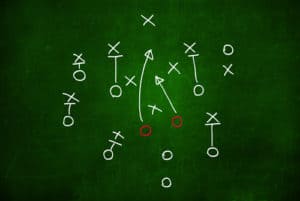
Successful sports bettors know sports inside out. First and foremost, they become an expert in one sport and then usually expand to other sports. They understand how the sport is played, all of the rules and strategy.
They also possess in-depth knowledge about the players, coaches, organizations, trades and much more. They keep up on daily developments in the sport and closely monitor any and all changes.
They eat, breathe, drink and live one particular sport.
Why do they do this? Because when it comes to wagering, the sports bettor wants any edge that they can get and usually that edge starts with knowledge. Sports betting is not about wagering on a hunch or a whim. Top-notch professional sports bettors do their homework.
 You also have to know everything you possibly can about betting theory and strategy. Along with understanding odds, the various types of bets and payouts, you need solid knowledge regarding which bets offer the best value on your investment.
As an example, many novice bettors will play three, four and five-game parlays. A parlay payout looks inviting. A three-team parlay pays 6:1. That means for every dollar bet you make six if your parlay hits. An eight-team parlay pays 175:1 and a 10-team parlay results in a payout of 600:1!
But many parlays involve point spreads and this really skews the odds. The chances of hitting a three-team parlay are 7:1 and the chances of being right on a 10-team parlay are 1,023:1.
In order to win any parlay, every team you pick must win. If you’re wrong on one bet, you lose everything. Although the payouts are much better than the even odds you often get on a single bet, parlays are deceptively difficult to hit. There’s a lot more risk involved wagering on a parlay than when you bet on single games.
This doesn’t mean that you can’t play parlays or other such bets. Some professionals believe in them and have developed systems for improving your chances. However, whatever wagers you decide to make, you need to bet knowing the benefits and risks.
 Too often those new to this will bring $100 to the table and expect to transform that $100 into $1,000 in one day. Can it be done? Sure it can. Would you need to be amazingly lucky to turn a profit like that? Yes, you would.
The size of your bankroll determines how much power you have as a bettor and how much profit you stand to make. It doesn’t mean you need to possess a huge bankroll to make money as a sports bettor, but you do need to bring realistic expectations to the table or you’ll walk away angry, disappointed and broke.
Money management involves wise decision-making, solid record keeping and vigilance. Treat your sports endeavors as you would a business and you’ll stand a much better chance of making a profit.
As you begin your journey, take some time to address each of the major elements—the sport, the industry and money management. Don’t wager in a vacuum. As with any other business, knowledge equals power and profit.


